%20%20May%2006,%202006%20010.jpg)
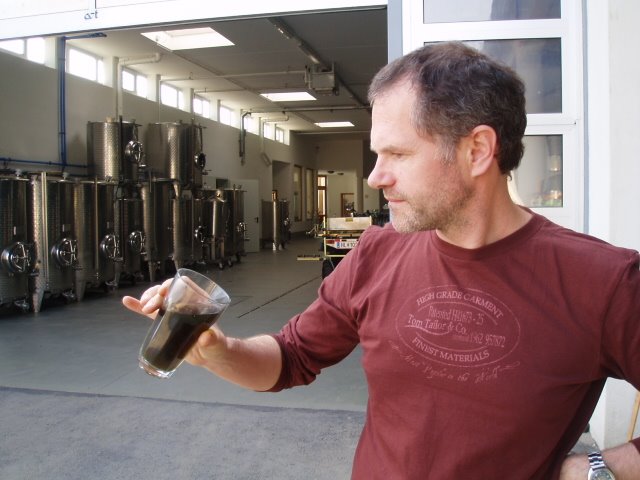
Herrn Herbert Oertler inspects decanted composts around 2006 (at "Manincor" near Bolzano, Italy).
Creating healthy soils is the key to healthy plants. One cannot say it more simply. When soils start to deteriorate due to poor managment, overuse, lack of humus...plants are foced into a compromising position of a weakened nutritional cycle and loss of immunological response capacity (IRC). Increasing IRC is our number one focus in all of our contemplations and methods. Humus, not compost, nor nitrogen, nor whatever, is, what makes the world go round. Without humus and its transformative and life-giving biology, there would be no plants, no animals and no humans on Earth. Understanding humus, as the most basic foundation of healthy agriculture is a must. Unfortunately, humus is one of the least understood (and least respected) components of farming today. Our approach aims at increasing IRC and natural, healthy productivity through a series of complimenting methods - however - all of these are based on and build on healthy humus development. Compost is but one method of increasing humus in the soil. Appropriate soil management, green manuring, cover cropping and biological and biodynamic sprays belong in everyone's healthy soil care.
Creating healthy soils is the key to healthy plants. One cannot say it more simply. When soils start to deteriorate due to poor managment, overuse, lack of humus...plants are foced into a compromising position of a weakened nutritional cycle and loss of immunological response capacity (IRC). Increasing IRC is our number one focus in all of our contemplations and methods. Humus, not compost, nor nitrogen, nor whatever, is, what makes the world go round. Without humus and its transformative and life-giving biology, there would be no plants, no animals and no humans on Earth. Understanding humus, as the most basic foundation of healthy agriculture is a must. Unfortunately, humus is one of the least understood (and least respected) components of farming today. Our approach aims at increasing IRC and natural, healthy productivity through a series of complimenting methods - however - all of these are based on and build on healthy humus development. Compost is but one method of increasing humus in the soil. Appropriate soil management, green manuring, cover cropping and biological and biodynamic sprays belong in everyone's healthy soil care.